To Learn, Not to Correct
It is a globally acknowledged fact that no nation in the world presently compares with Nigeria in terms of sustained revival influence and the sheer number of God’s generals who are shaping the face of global Christianity.
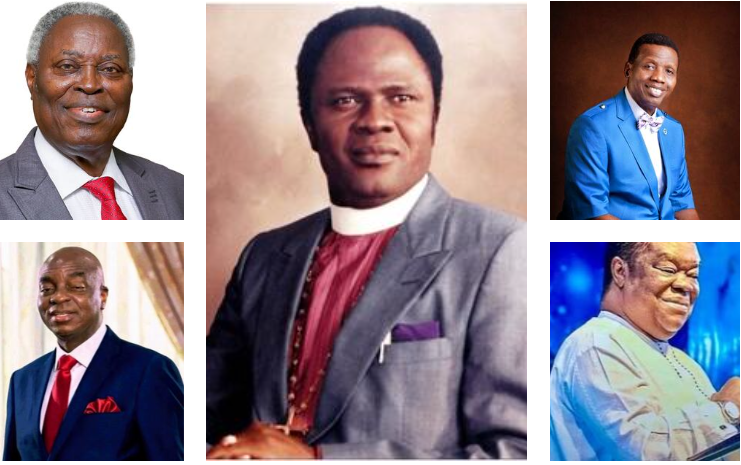
From Apostle Joseph Ayo Babalola, to Archbishop Benson Andrew Idahosa, Pastor Enoch Adejare Adeboye, Pastor William Folorunso Kumuyi, Archbishop Joseph Olaitan Adenuga Orisejafor, Bishop David Olaniyi Oyedepo, Bishop David Abioye, and Evangelist Uma Ukpai, just to name a few, Nigeria undeniably stands as a nation that has produced men of spiritual stature, depth, and global impact.
If we add to this list the names of ministers from a newer dispensation, men such as Apostle Johnson Suleman, Dr Paul Enenche, Apostle Arome Osayi, Apostle Joshua Selman, and Apostle Michael Orokpo, from whom many young Cameroonian ministers openly draw mentorship, spiritual covering, and doctrinal formation, it becomes obvious that the current generation of Cameroonian ministers has much to learn from Nigerian fathers.
I personally became even more aware of the depth of Nigeria’s influence on Cameroonian Pentecostalism while writing The Fathers of the Cameroon Movement. My research led me to an unavoidable conclusion: the Pentecostal Church in Cameroon is largely an offspring of the Pentecostal movement in Nigeria.
This is evident in the fact that the two predominant Pentecostal denominations in Cameroon, The Apostolic Church Cameroon (TACC) and the Full Gospel Mission Cameroon (FGMC), both stem from Nigeria, directly or indirectly. Beyond denominations, almost all notable Nigerian Pentecostal fathers have, in one way or another, impacted the Cameroonian land, through missions, doctrine, spiritual encounters, or apostolic influence.
It therefore deeply troubles me to see some young Cameroonian preachers attempting to “correct” these fathers, or making statements such as a comment I recently saw under one of my posts: “Don’t bring us that Nigerian thing here,” referring to spiritual fathering.
Some of these fathers in Nigeria have grown beyond individuals, they have become institutions. Just days ago, the Governor of Delta State was seen serving as an usher during Shiloh 2025. How then does a young man, still struggling to find spiritual footing, rise to correct a man like Bishop David Oyedepo, whose ministry has shaped generations and systems?
Whether we like it or not, the Nigerian Pentecostal Church has its flaws, no spiritual movement is without imperfections. Yet, notwithstanding these flaws, they are miles ahead of us in structure, continuity, institutional stability, and generational impact.
Rather than attempting to correct Nigerian fathers, we should be learning from them. Because at the end of the day, evidence is the end of all argument. We may have arguments, but they have evidence.
To gain deeper insight into the story of Nigeria’s influence on Cameroonian Pentecostalism, I invite you to get a copy of my book, The Fathers of Cameroonian Pentecostalism.
Rev. Bobbs Lyonga Elive
(Visited 3 times, 1 visits today)



About The Author